Don't Look
Shader-Based Echolocation
A Unity XR horror prototype where I built shader-driven echolocation and custom URP rendering systems to make visibility itself the central gameplay mechanic.
 Unity
Unity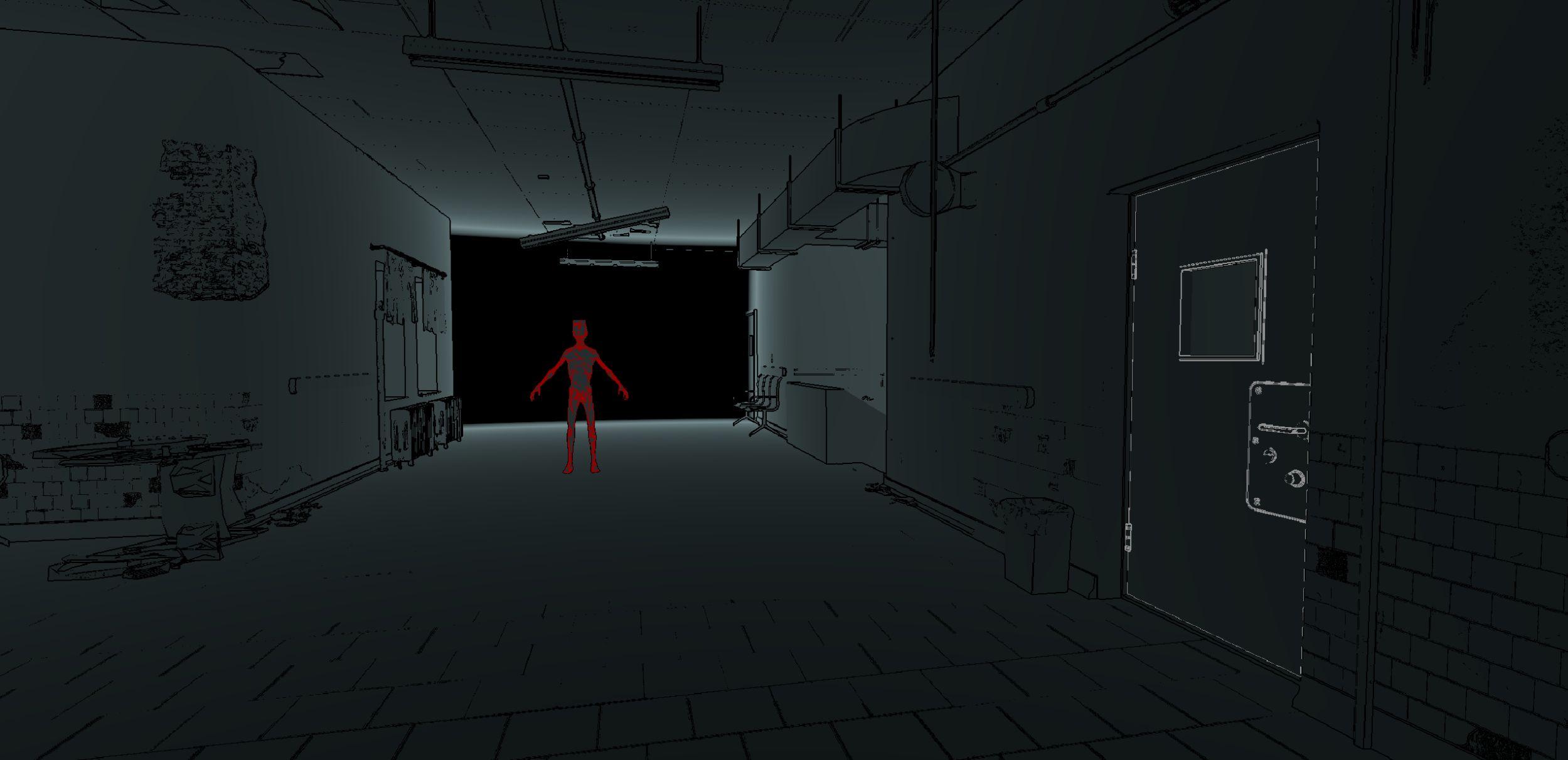
The Problem
In horror games, darkness can create atmosphere, but it can also reduce interaction clarity. I wanted to build a Unity XR prototype where limited visibility was not just presentation, but the core mechanic, using echolocation pulses to control how players perceive space, danger, and interaction.
What I Built
Designed and implemented a shader-based echolocation system that reveals the environment through expanding visual pulses
Built custom URP rendering passes to highlight enemies and interactable objects using layered color and object ID buffers
Developed the experience in Unity with C#, integrating the Input System and XR tooling for immersive first-person interaction
Created an abandoned hospital horror prototype driven by limited visibility, audio cues, and spatial exploration
Implemented environmental interactions such as doors and object affordances to reinforce tension and decision-making under pressure
Why It Matters
This project shows the intersection of rendering, gameplay systems, and player experience design. It demonstrates that I can use technical rendering work to serve mechanics directly, turning visual systems into the foundation of play rather than just aesthetic support.
Explore Further
Gameplay footage, release pages, documentation, and supporting material.